When Regulation Determines
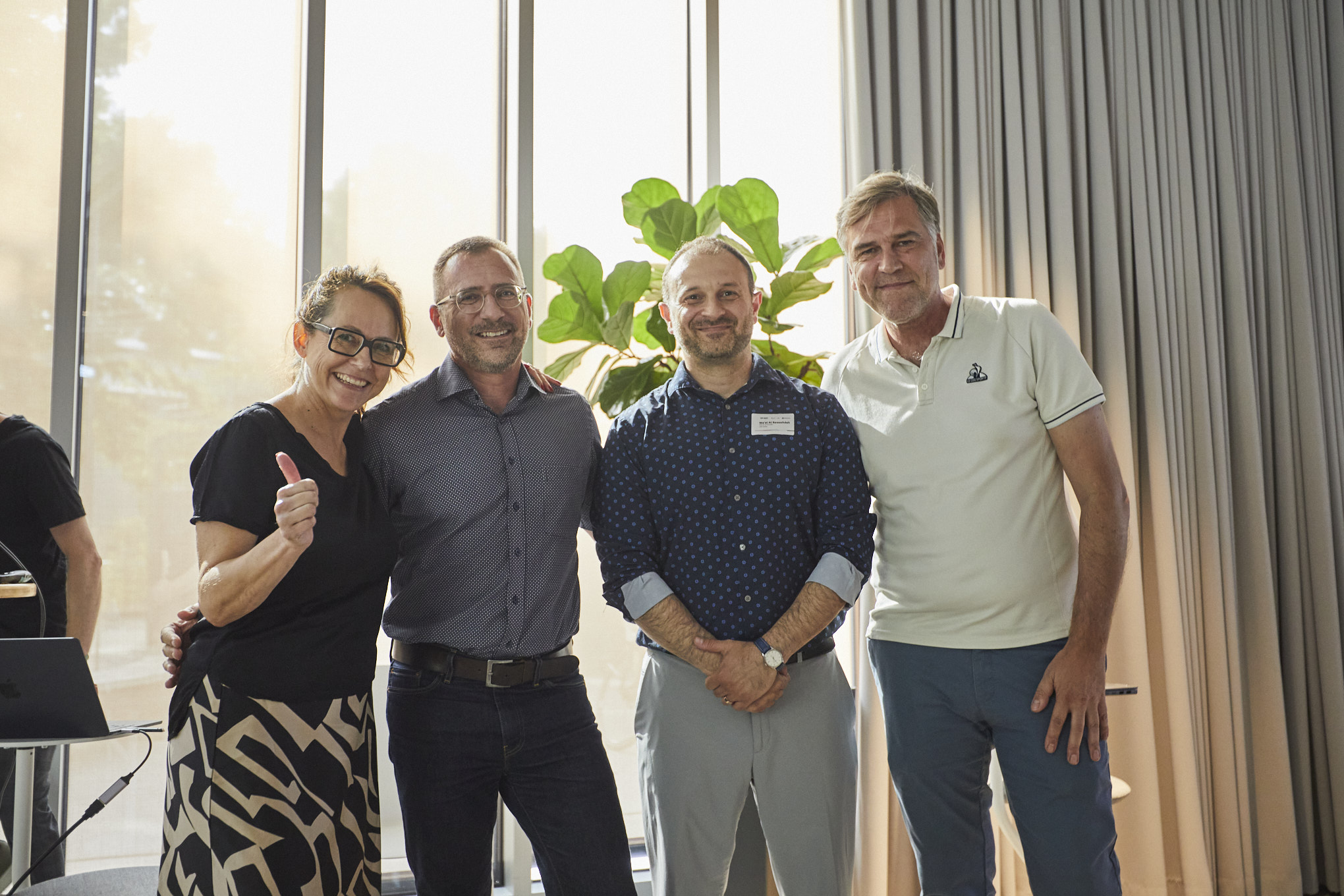
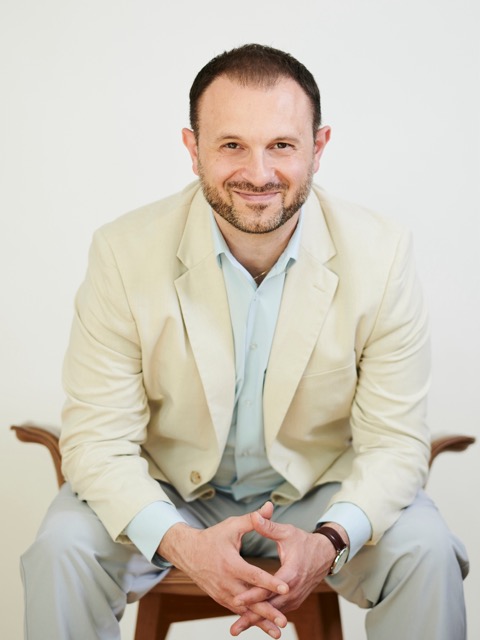
JWP, a bootstrapped, self-financed startup, is developing a platform designed to deliver drugs directly to their site of action, aiming to fundamentally transform medical treatments. However, the true challenge only begins when research needs to be turned into a commercial product. In this interview, founder Dr. Wa'el Al Rawashdeh discusses regulation, venture capital, and the question of why excellent research does not automatically translate into successful companies.
Wa’el, you like to compare JWP to Amazon. For a MedTech start-up, that is quite an unusual comparison.
(Laughs) Yes, because outside of MedTech, hardly anyone can grasp what "In Bone Micropharmacies" actually means. That is why I always say: We are the Amazon for local drug delivery in bone. We do not develop the medications ourselves. They are clinically approved. We simply ensure that they arrive exactly where they are needed, and that they remain effective for precisely as long as they are required. That is the simplest way to explain our platform. We imagine the future of our technology to deliver novel medications currently under evaluation by Big Pharma, once approved.
Okay. How does that work in practice?
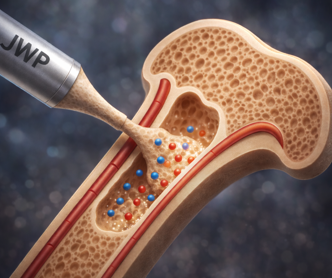
Let’s take a bone infection as an example. Today, a patient usually requires two surgeries. First, the surgeon removes the infected tissue. This is followed by six or more weeks of systemic antibiotics, which affect the entire body even though they are only needed in one specific spot. Only after that is a second operation performed to insert a carrier matrix graft, which can be the patient's own bone (autograft), human bone (allograft), or synthetic-based grafts. Our platform combines these two steps. We transform the allograft into a local drug delivery. The carrier matrix that already contains the antibiotic, releases it locally over the necessary period, and simultaneously supports bone regeneration. Two surgeries become one. We intend to apply the exact same principle to forms of bone cancer later on. Therapeutic agents could be delivered directly to remaining tumor cells instead of placing a burden on the entire body. However, a bone infection is the least complex example to explain the underlying principle.
That sounds like a fairly obvious solution. Why does it not exist yet?
Because our biggest challenge isn't just the technology. Orthopedic surgeons understand the medical concept immediately. The challenge begins with regulation. In the US, industrially processed human tissue is classified as a medical device. In Germany, a comparable procedure is highly likely to be evaluated as a tissue preparation, thereby falling under the Medicines Act (Arzneimittelgesetz). This classification alone determines which development pathway we must pursue. If the focus is placed on the drug aspect, we are suddenly talking about five to ten years of clinical trials and investments of up to 20 million euros. Yet, we are not developing a new antibiotic. The antibiotic has been used successfully for decades. Our innovation is the localized release of the active substance.
So the real challenge only begins once the research is completed?
Exactly. From that moment on, the regulatory classification changes practically everything. Our initial product strategy is therefore targeting the US. Not because the system there is simpler, but because it is clearer. You know exactly which regulatory pathway a product has to take, 50 states all fall under one regulatory body and the requirements are set at a federal level. For a start-up, this clarity makes an enormous difference in terms of strategic planning, capital deployment, clinical evidence required and manufacturing options. Nevertheless, payment is a separate challenge because in the US there are numerous partners and organizations and insurance companies that a MedTech company has to make individual agreements with, it‘s not all simple also in the US.
So it doesn't fail at the research stage?
No. We deliberately keep our research in Germany. I am deeply convinced of the quality of our universities, our research infrastructure and our human capital. The real challenge begins only afterward, when research needs to be turned into a product. We in Germany still have serious catching up to do in terms of real innovation funding, translation and reducing barriers. We are over-focused on risk minimization.
Does the problem ultimately also come down to money?
Yes. Capital is a crucial part of the challenge. We have to tailor our first product entirely to the US market. Not because we necessarily want to, but because we have significantly better market opportunities there, clear regulatory pathway, higher tolerance for risk and appetite for innovations. At the same time, we cannot live on investments alone; we have to generate revenue at some point. Especially in the current market, we see that investors have become very cautious. In Germany in particular, you notice how conservatively investments are made. We often hear: "Come back when you are in the clinical phase." But that is exactly the point up to which a DeepTech company needs the funding.
What does venture capital mean to you then?
Germany talks a lot about start-ups, but our system is optimized for spin-offs. These two terms are used interchangeably and they should not be. Not all startups are spinoffs, but all spinoffs are startups. Many investors want to take as little risk as possible. That is understandable, but risk ventures are exactly what venture capital is for. Anyone who only invests once the greatest risk has already been overcome is no longer financing innovation, they are financing growth. In my humble opinion, the biggest venture capital investor in Germany is our federal government because academic spinoffs are financed through federal grants at state universities, which means tax money pays for driving innovation and this model is not sustainable nor competitive against the models in the US, China, Korea and all the countries that are ahead of us already.
Nevertheless, you want to build the company in Germany. Why?
I would prefer it if we secured our first financing round with German investors because I know the value of local/national strong core as a launchpad, and I am immersed in the regional ecosystem and strongly believe in its potential and quality. International investors can come on board later. If the lead investor comes from the US too early, there is always the danger that the research and the company will relocate there. I want to deliberately keep research and development in Germany. It isn't always easy; you really have to fight. But we have already achieved an incredible amount. At the end ofthe day, progress and development occur where there is a supporting environment and pathways to capital, and I am driven to achieve this in Germany, yet it is not all in my hand.
If you could change one thing about the German start-up ecosystem tomorrow, what would it be?
I will speak as a founder of a bootstrapped StartUp. I believe we need to become more creative. Capital does not just meancash. There are laboratories, infrastructure, and resources that are currently not being fully utilized at large universities. Why not support start-ups with these earlier on and take small equity stakes in return or future return like VSOPs? 50,000 or 100,000 euros is often an insignificant amount of money for a large state university, but for a start-up, it can mean thedifference between life and death. My call is: Don't charge me now but bet on my success and I will repay you in folds.

Read more: